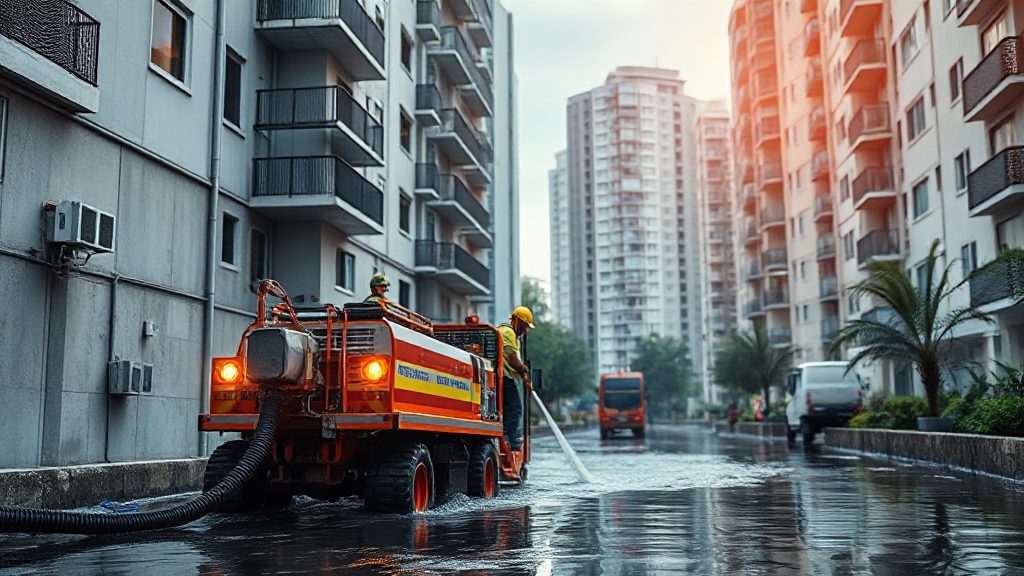
Why Your Neighbor’s Clog Becomes Your Flood in a Belém Low-Rise
Picture this: a ground-floor apartment in a Belém low-rise is suddenly ankle-deep in foul water, while the upstairs neighbor, who just finished washing dishes, notices nothing at all. How is that possible? The answer lies in the building’s shared drainage stack — a single vertical pipe that collects wastewater from every unit above and carries it down to the street. When that stack clogs, the backup doesn’t always appear where the clog started. It finds the weakest point, often the lowest fixture, and that can mean your floor drain, your shower, or your kitchen sink.
Understanding this shared plumbing is the first step to protecting your home. Whether you rent or own, knowing how waste travels through the building helps you act fast and call the right help. Many residents in Belém rely on a professional desentupidora Belém service to clear blockages before they turn into costly floods. This article explains the stack, three common ways a clog travels, and what neighbors can do together to prevent repeat problems.
The anatomy of a shared drainage stack: a vertical diagram in words
Imagine a tall, narrow column running from the roof to the basement. At every floor, horizontal pipes branch off from this column to serve sinks, toilets, showers, and floor drains. That column is the drainage stack, also called the soil stack or waste stack. It relies on gravity and air pressure to move waste downward smoothly. At the bottom, the stack connects to a building drain that slopes gently toward the public sewer or a septic system.
Each fixture has its own trap — the curved pipe under your sink or the water seal in your toilet — that blocks sewer gases from entering your home. Between the fixture and the stack, there is a short branch pipe. When everything works, waste and water flow down and away without hesitation. But when the stack or a branch clogs, the next flush or load of laundry has nowhere to go but back up.
Why the lowest fixture usually floods first
Water always seeks the lowest available exit. If the main stack is blocked below the ground-floor level, the wastewater from upper floors will rise in the pipe until it finds an opening. That opening is often a floor drain or a shower stall on the ground floor, because those fixtures sit closest to the blockage. The upstairs neighbor sees no problem because their branch pipe still drains freely into the stack — until the stack fills completely. By then, the damage is already done downstairs.
The role of venting and air pressure
Proper venting allows air to enter the stack as water flows down, preventing a vacuum that would slow drainage. In older Belém buildings, vents may be undersized or blocked by debris or bird nests. Poor venting can make clogs worse and cause gurgling sounds or slow drains throughout the building. If you hear gurgling in multiple units at once, the stack or vent is likely involved.
Three scenarios: how a clog travels from one unit to another
Not every clog behaves the same way. The path it takes depends on where it starts, how much water is used, and the condition of the pipes. Here are three common scenarios that explain why your neighbor’s problem becomes your flood.
Scenario 1: The stack blockage below the ground floor
A buildup of grease, soap, hair, and paper forms a plug in the main stack just below the lowest branch. Upstairs, water drains slowly but still goes down. Downstairs, the floor drain starts to bubble and then overflows. This is the classic case of a clog that announces itself far from its source. The fix requires rodding or hydrojetting the stack from a cleanout, often from the basement or an exterior access point.
Scenario 2: A branch clog that backs up into a neighbor’s fixture
Sometimes the clog is in a horizontal branch pipe that serves two or more units. For example, a kitchen sink line shared by adjacent apartments can clog with grease. When one neighbor runs the dishwasher, the wastewater backs up into the other neighbor’s sink because the branch is blocked downstream. This type of clog is trickier to diagnose because the symptoms appear in a unit that didn’t cause the problem.
Scenario 3: The overloaded stack during peak use
Even without a hard clog, a stack that is partially narrowed by scale or debris can fail under heavy simultaneous use. Morning showers, laundry, and dishwashing all at once can overwhelm the pipe’s capacity. Water rises in the stack and finds the nearest relief point — often a ground-floor shower or a low toilet. This scenario is common in older buildings with undersized or corroded pipes. A professional desentupidora Belém São Paulo SP can inspect the stack with a camera and recommend cleaning or repair before the next peak hour.
What residents can do collectively to prevent backups
Prevention is a shared responsibility. A single neighbor pouring grease down the drain can eventually affect everyone below. Here are practical steps that low-rise residents can take together.
- Never pour grease or oil down the sink. Collect it in a container and dispose of it in the trash. Grease cools and hardens inside pipes, creating sticky traps for other debris.
- Use drain strainers in every sink and shower. Hair and food particles are the most common causes of branch clogs. Strainers catch them before they enter the pipe.
- Flush only human waste and toilet paper. Wipes, paper towels, and feminine products do not break down and are frequent culprits in stack blockages.
- Schedule periodic professional cleaning. Buildings with mature trees or older pipes benefit from annual or bi-annual hydrojetting of the main stack. This removes scale and grease before they cause a full blockage.
- Agree on a shared contact for emergencies. When a backup happens, quick action limits damage. Having a trusted desentupidora em Belém São Paulo SP number on hand for all residents can save hours of confusion.
Beyond these habits, talk to your neighbors about what goes down the drain. A brief conversation in the hallway or a note in the common area can prevent the next flood. If you notice recurring slow drains or gurgling sounds, report them to the building manager or landlord immediately — they are early warnings of a stack problem.
When to call a professional and what to expect
Some clogs are stubborn. If plunging or a hand auger doesn’t clear the line, or if multiple fixtures are backing up at once, it’s time to call a professional. A qualified technician will first locate the blockage using a camera inspection, then choose the right method: rodding for simple clogs, hydrojetting for grease and scale, or excavation for collapsed pipes. In Belém, emergency services are available 24 hours, which matters when a backup happens at night or on a weekend.
Costs vary depending on the access point, the severity of the clog, and whether the problem is in a branch line or the main stack. Simple branch clogs are usually quick to fix, while main stack blockages may require more time and equipment. Ask for a clear explanation of the cause and a written estimate before work begins. A reputable company will also advise on preventive measures to avoid a repeat.
Finally, remember that your building’s plumbing is a shared system. A clog in one unit can quickly become a flood in another. By understanding the stack and working together, residents of Belém low-rises can keep wastewater flowing where it belongs — down and away.
