Stuck With a Blocked Drain in Paulínia? How Do You Choose a Desentupidora That Actually Fixes It?
By the end of this article, you will know exactly how to pick a desentupidora Paulínia SP that solves the blockage instead of just poking at it — and you will have a short checklist to run through before you dial. This is written for the person who already tried the plunger, poured the chemical bottle down the drain, and is now staring at water rising in the wrong direction. The search intent here is practical: you need a provider, fast, and you want to avoid paying twice.
The core answer: in Paulínia, a blocked line is rarely solved by a single tool. A reliable provider diagnoses the line first (drain, branch, or main), then matches the method — manual auger, hydro jetting, or camera inspection — to the blockage type. Anything less is a guess, and guesses are what make people call a second company three days later.
1. Confirm What Kind of Blockage You Actually Have
Before you compare companies, identify the symptom. A single slow sink is a branch problem. Multiple fixtures draining slowly at once, or water backing up into the floor drain when you use the washing machine, points to the main line. That distinction changes the equipment and the price.
Three quick signals to check:
- One fixture only — localized clog, usually hair, soap, or grease.
- Several fixtures at once — the branch or main is obstructed.
- Gurgling and sewer smell — gas is pushing back through the trap, which means the line is venting poorly or partially blocked.
Write down what you observed and when it started. A provider who asks these questions before quoting is already showing you how they work. A provider who quotes a flat price over the phone without asking anything is selling a lottery ticket.
2. Match the Method to the Problem, Not the Price
This is where most people lose money. The cheapest option is often a hand auger or a manual snake, which is fine for a hair clog in a bathroom drain and useless against roots or hardened grease in a 100 mm main. If the technician arrives with only one tool, the outcome depends on luck.
Ask directly which method they intend to use and why. A professional desentupidora Paulínia will explain the difference between mechanical clearing and hydro jetting, and will tell you when a camera inspection is warranted before anything goes into the pipe.
Mechanical clearing versus hydro jetting
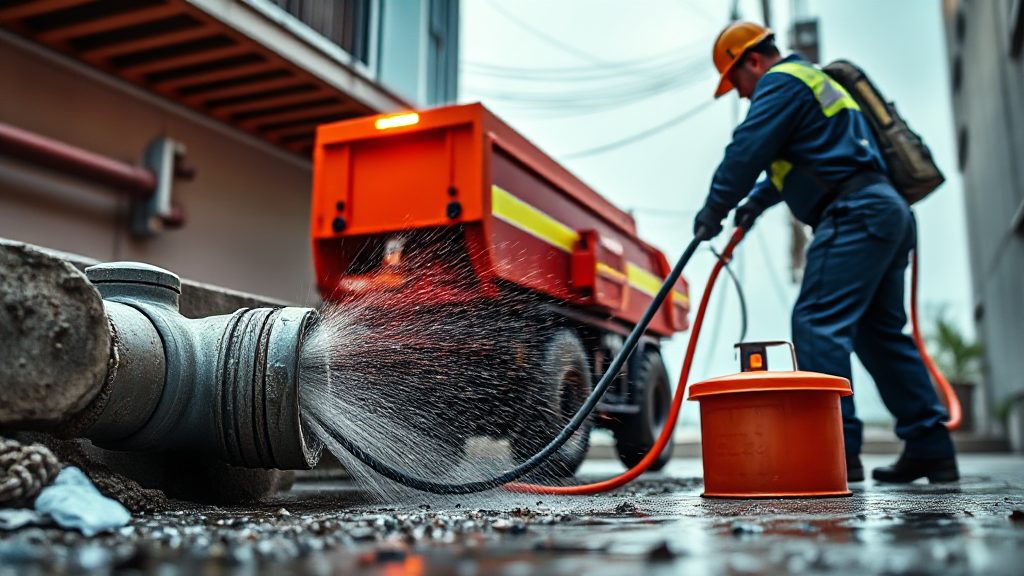
Mechanical augers cut through soft blockages and pull back debris. Hydro jetting uses high-pressure water to scour the pipe wall, which removes grease film and sediment that a snake leaves behind. For recurring clogs in a kitchen line or a commercial grease trap discharge, jetting is usually the durable fix; for a single foreign object, mechanical retrieval is enough.
When a camera inspection pays for itself
If the same line has blocked twice within a few months, stop repeating the clearing and inspect. A camera shows roots, collapsed joints, belly in the pipe, or a buildup that no amount of snaking will remove. That footage also protects you: it documents the condition of the line before and after the service.
3. Check Availability and Response Time for Emergencies
Blockages do not schedule themselves for business hours. Sewage backing up into a ground-floor bathroom at 11 pm is a health issue, not an inconvenience. Confirm whether the company offers 24-hour emergency response and what “emergency” actually means in practice — a live dispatcher, or a voicemail box.
Ask two questions: how long until a team arrives in your neighborhood, and is there an extra charge for nights, weekends, or holidays? A provider that answers both clearly is one you can rely on. Vague answers about “quickly” are a warning sign.
Paulínia sits within a region where traffic on the main access roads can add real minutes, so a company that already operates in the area will usually arrive faster than one dispatching from the far side of the metro area. That local presence matters more than a flashy website.
4. Verify Licensing, Equipment, and Insurance Before Anyone Opens a Pipe
This is the step people skip, and it is the one that protects your property. A technician working on your sewer line can damage tiles, joints, or the cleanout if the equipment is wrong or the pressure is set too high. Ask whether the team carries liability coverage and whether the equipment is professional-grade.
Look for a uniformed crew, a marked vehicle, and a company that issues a service order before starting. A written order with the scope, method, and price is your only real protection if something goes wrong.
Also confirm how they handle waste. Desentupimento and fossa cleaning generate material that must be disposed of correctly, not dumped. A provider that cannot explain where the removed waste goes is not one you want in your building.
5. Get the Quote Structure in Writing, Including What Is Not Covered
Prices for drain clearing vary by access difficulty, pipe diameter, method, and time of day. A quote that is a single number with no breakdown is hard to compare and easy to inflate on site. Ask for the components: call-out, per-meter clearing, hydro jetting, camera inspection, and waste removal.
Then ask what happens if the first attempt fails. Does the company charge again to return? Is there a warranty period on the service? A reasonable provider stands behind the work for a defined window and returns at no cost if the same line blocks again immediately.
| Cost factor | What to ask |
|---|---|
| Call-out fee | Is it included in the final price or added on top? |
| Method | Is hydro jetting priced separately from mechanical clearing? |
| After-hours | What is the surcharge for nights and weekends? |
| Return visit | Is there a warranty, and for how long? |
Compare at least two written quotes. The lowest number is rarely the lowest total cost once return visits and damage are factored in.
6. Avoid the Three Mistakes That Cause Repeat Calls
Most people who end up frustrated made one of three errors. The first is pouring repeated chemical drain cleaner into a fully blocked line; the chemicals sit against the clog, can damage older pipes, and create a hazardous splash risk for the technician who arrives later. If the drain is completely stopped, stop adding chemicals.
The second mistake is hiring on price alone without asking about method. The third is ignoring the root cause. A kitchen line that clogs every few months is telling you something about grease disposal or pipe slope; clearing it without addressing that guarantees a fourth call.
If you live in a condominium, loop in the síndico before authorizing work on a shared line. A desentupidora em Paulínia SP that regularly serves buildings will know how to document the intervention for the building records, which matters if the blockage recurs and responsibility needs to be established.
7. Run the Closing Checklist Before You Book
Use this list as a final filter. If a company fails two or more items, keep looking.
- They ask about symptoms before quoting.
- They name the method and explain why it fits.
- They confirm 24-hour availability and after-hours pricing.
- They provide a written service order with scope and price.
- They explain waste disposal.
- They offer a warranty or return policy.
- They suggest inspection after a repeat blockage instead of another blind clearing.
One final point: prevention is cheaper than any call-out. Periodic hydro jetting on kitchen and commercial lines, correct grease disposal, and hair traps in bathrooms reduce the frequency of blockages substantially. A provider that offers a maintenance schedule is thinking beyond the single job.
Frequently Asked Questions
How quickly can a desentupidora arrive in Paulínia at night?
Response time depends on the company’s local dispatch. Ask for an estimated arrival window when you call and confirm whether an emergency surcharge applies. Companies already operating in the region typically arrive faster than those dispatching from distant bases.
Is hydro jetting safe for older pipes?
It can be, but pressure must be adjusted to the pipe’s condition. That is why a camera inspection is recommended before jetting a line of unknown age or condition. A professional will assess before applying high pressure.
Should I use chemical drain cleaner first?
For a fully blocked line, no. Chemicals can damage pipes and create hazards for the technician. Mechanical clearing or hydro jetting is the safer route for a complete stoppage.
What if the same drain keeps blocking?
That is a sign of a structural or buildup problem, not a simple clog. Request a camera inspection to identify roots, collapsed joints, or sediment before paying for another clearing.
